Interlocking Pavers
Interlocking pavers have become the fastest-adopted hardscape material across the GTA. Let Stoneville’s expertise turn your driveway, patio, or walkway into something timeless, built to last.
Ready to start your interlocking project?
Discover Interlocking Pavers
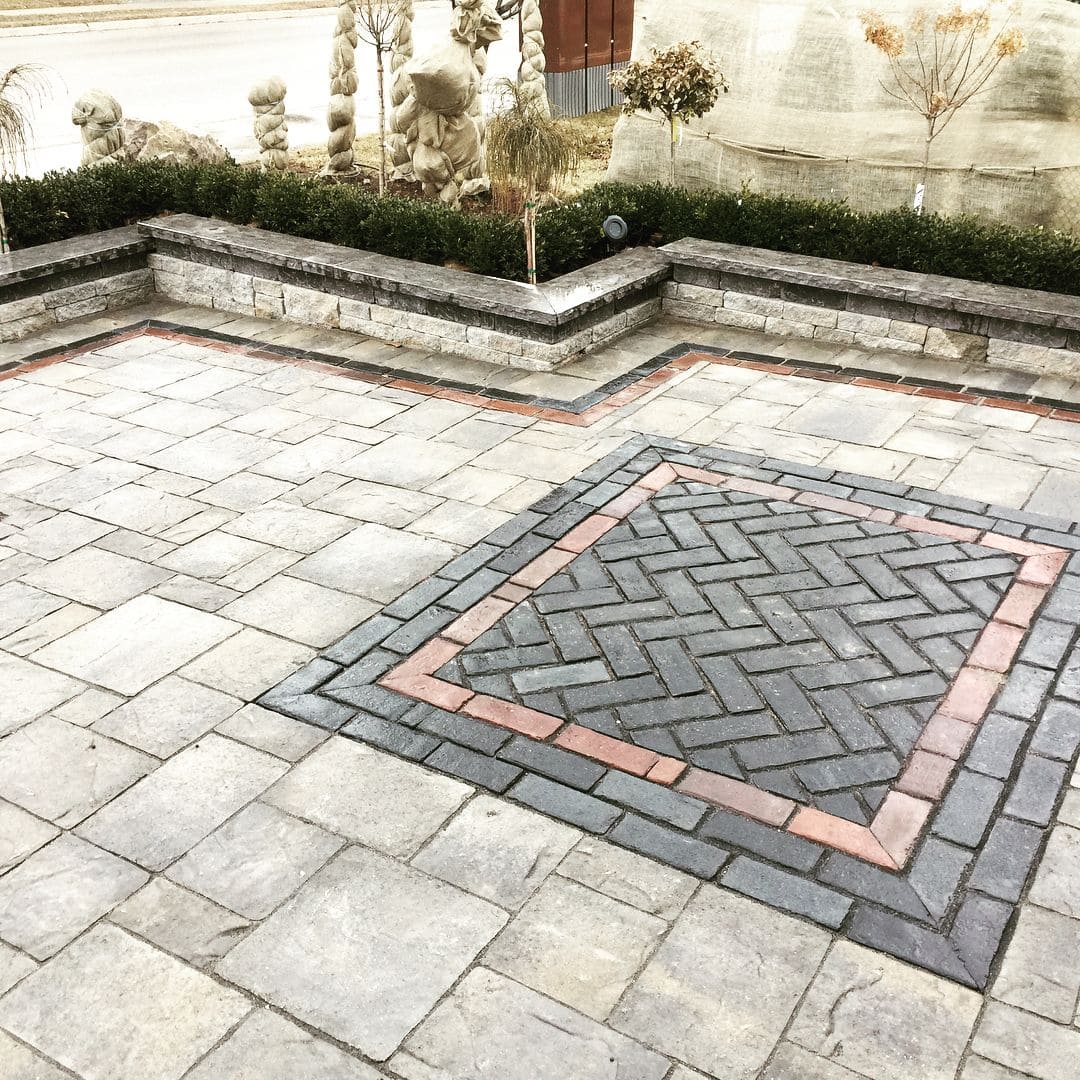
Interlocking pavers are precast concrete units, manufactured under high pressure to be denser and stronger than ordinary poured concrete. Installed properly, they last for decades. They come in a wide range of colours, shapes, sizes, and textures, and can be laid in everything from simple, uniform layouts to detailed patterns with contrasting borders and inlays.
Interlocking is one of the most versatile surfaces we install at Stoneville Landscaping, working equally well for driveways, walkways, patios, and pool decks. The pavers can also be set over a permeable, open-graded base, which makes them a practical option in areas that struggle with drainage, since water can pass through the surface instead of pooling on top.
What makes interlocking work is that it behaves as a system rather than a single slab. Each paver is held in place by the units around it, the jointing sand between them, and the prepared base underneath, all working together as one flexible surface. That flexibility is what allows the surface to handle ground movement without cracking.
Pricing
Interlocking projects start from $15 per sq ft
Our Interlocking Services
- Driveways →
- Walkways →
- Patios →
- Pool Decks →
- Repairs →
Recent Projects
Why Choose Interlocking?
Few things lift a home’s curb appeal like interlocking. Where asphalt looks flat and plain, a well-laid paver surface adds texture, pattern, and depth that turns a driveway or patio into a showpiece. It’s one of the highest-impact upgrades a homeowner in the GTA can make.
Interlocking also comes in a wide range of styles, from clean, modern layouts to classic European cobblestone. At Stoneville, we help you choose the colours, borders, and patterns that suit your home, and our in-house designer creates a detailed 3D render of the finished project before any work begins. You see exactly what you’re getting, and the result feels custom to your property rather than off-the-shelf.
And the appeal isn’t only visual. A well-built interlocking surface raises a home’s value and sets it apart on the street. It’s part of why interlocking has become such a popular choice across Toronto, and why Stoneville builds every project to look as good years from now as it does the day it’s finished.
Your interlocking project starts with choosing a reputable, licensed, and insured company, and Stoneville Landscaping brings the skills and experience to do it right the first time. We handle the design and the installation from start to finish, so when you’re ready to begin, we’re here to help.

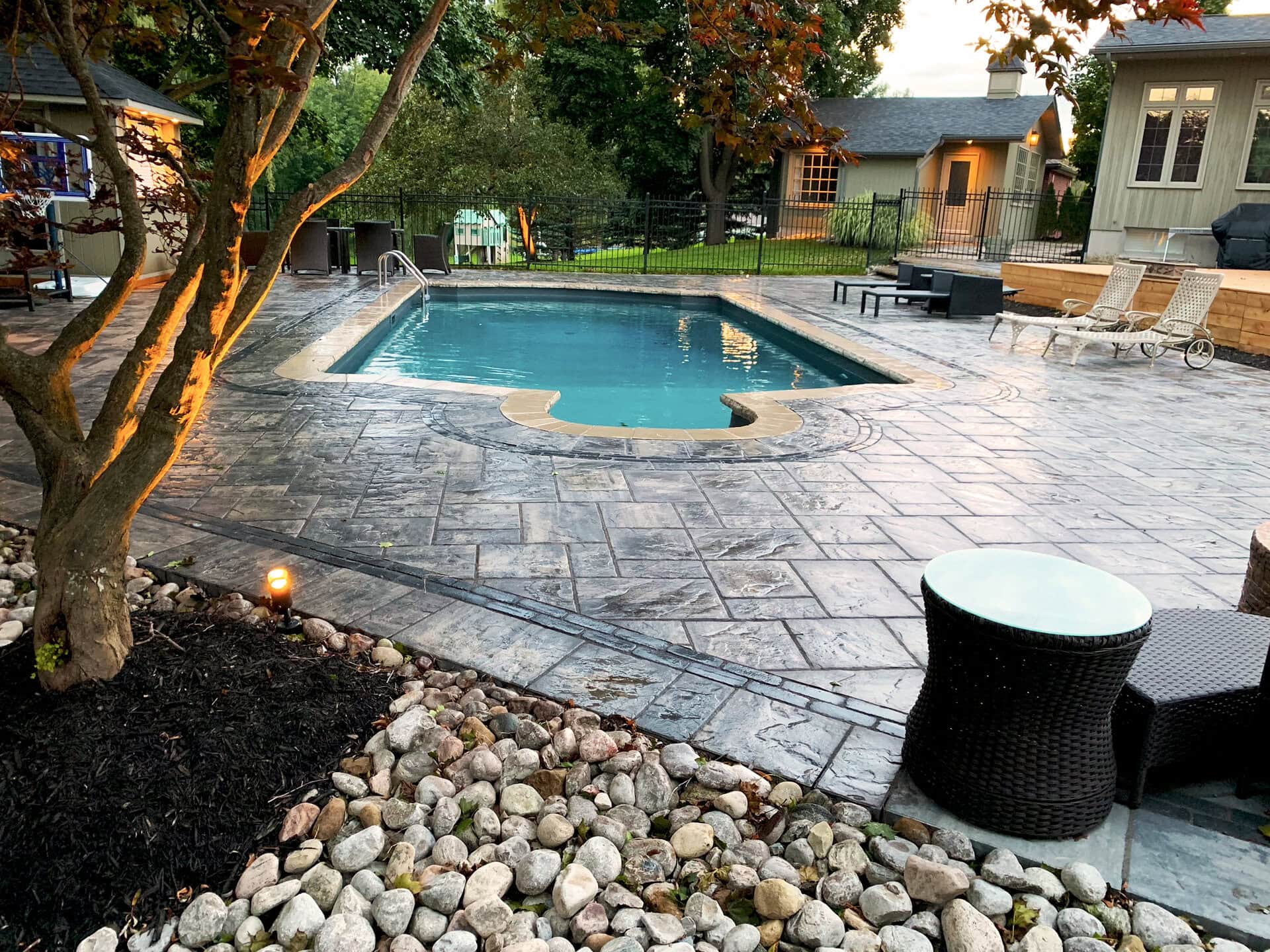
A custom interlocking pool deck in granite fusion pavers with contrasting charcoal inlays in King City, Ontario.
Every Stoneville project:
- Custom 3D design before we break ground
- Built to last through Ontario winters
- Backed by a 5-year warranty
Free, no-obligation estimate
Book a free consultation and we’ll come to your property, talk through what you have in mind, and give you an honest, detailed estimate. No pressure, no commitment.
How We Build It
Every Stoneville project follows the same process, refined over years of building interlocking projects that last. Here's what to expect from first call to finished surface.
Consultation and Design
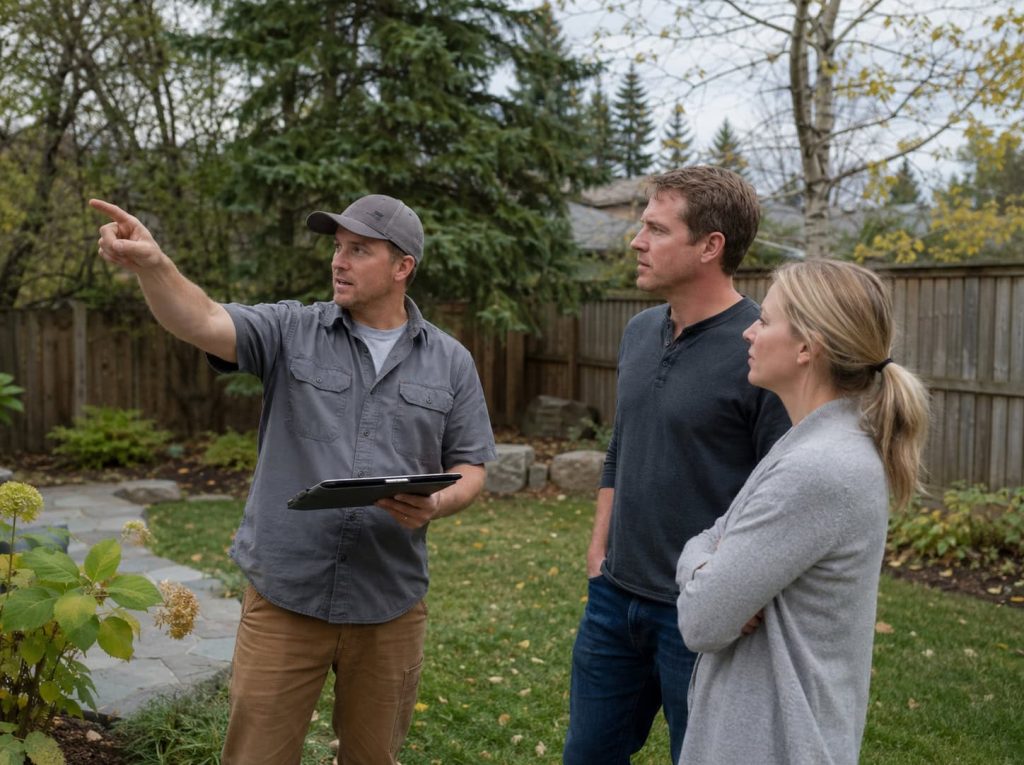
After contacting us, we visit your property, talk through what you have in mind, and provide a detailed estimate. Our in-house designer then creates a 3D render of the finished project, so you see exactly what you're getting before any work begins.
Excavation to Subsoil
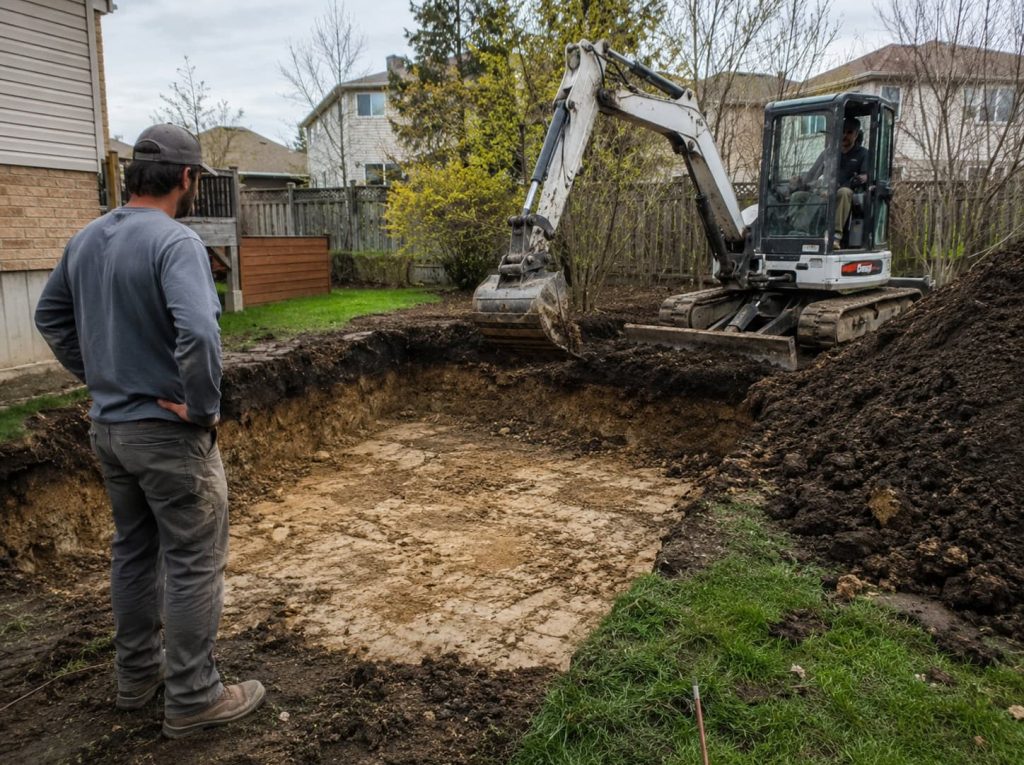
We excavate past the topsoil and down to undisturbed subsoil, the stable ground a long-lasting base is built on. Depth is set by what your soil conditions and project require, not a one-size-fits-all number.
Open-Graded Base
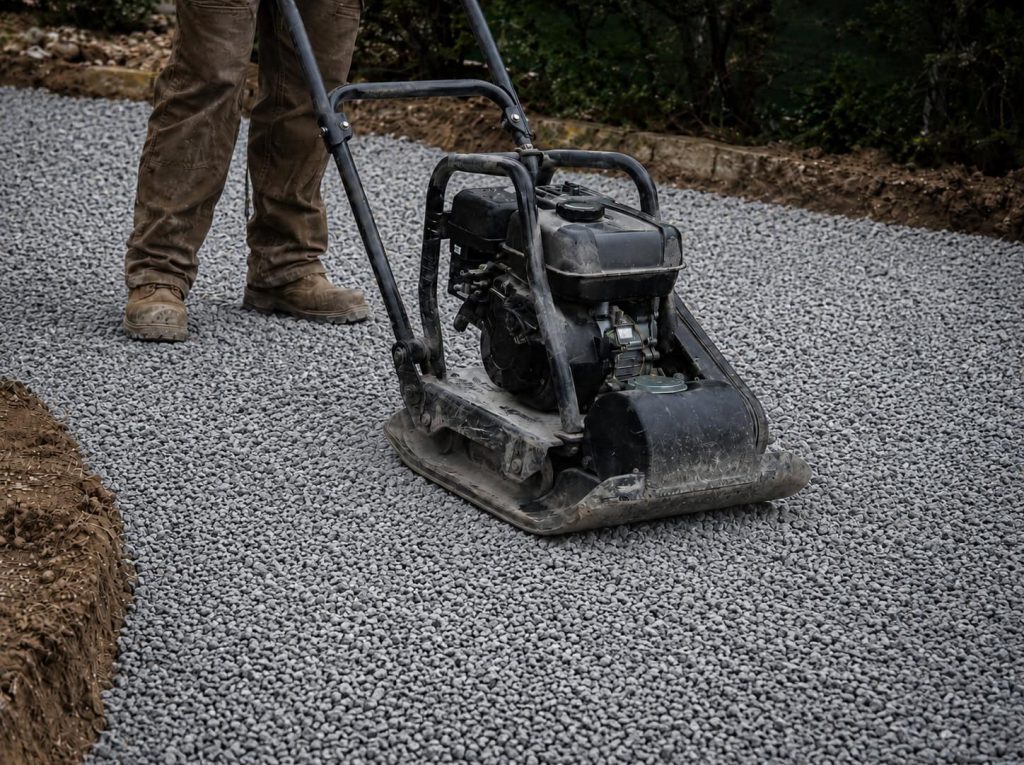
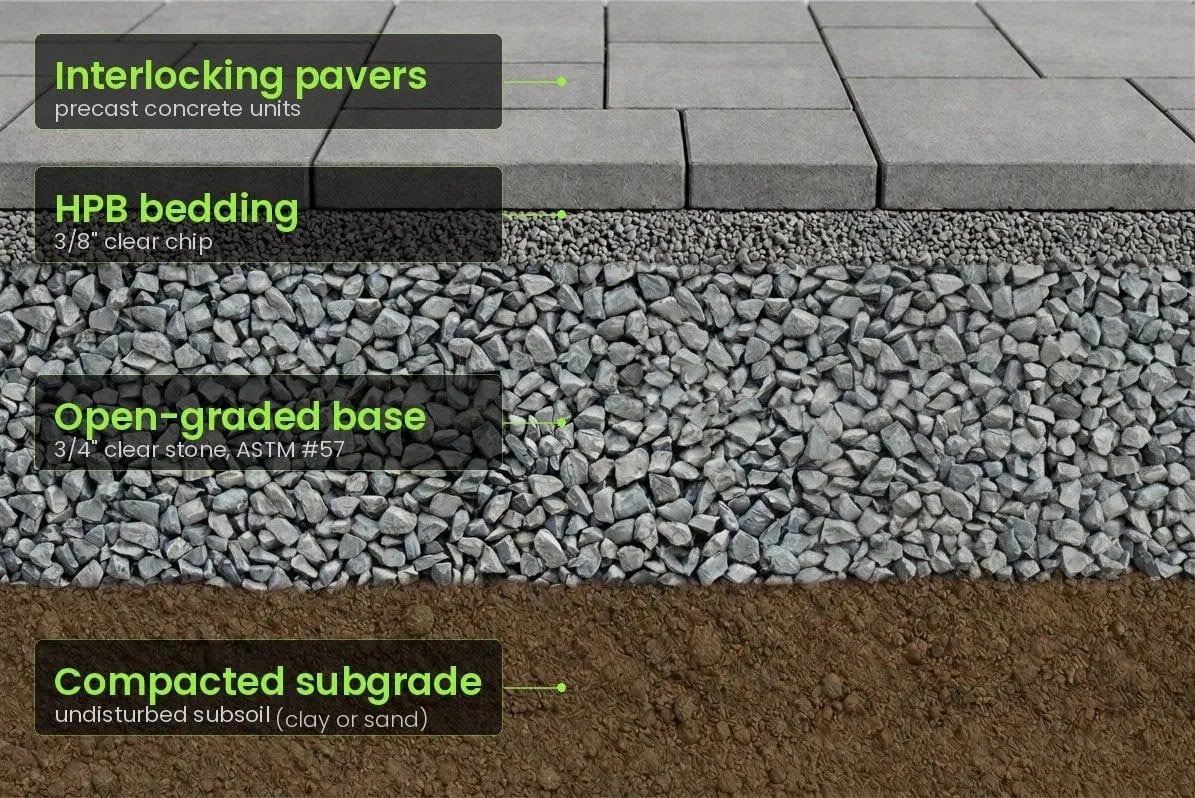
The base is built from ASTM #57 stone (3/4 clear) and ⅜-inch clear chip (HPB), placed and compacted in lifts. It's a fully permeable foundation that lets water drain through instead of trapping it where winter can do damage.
Precision Installation
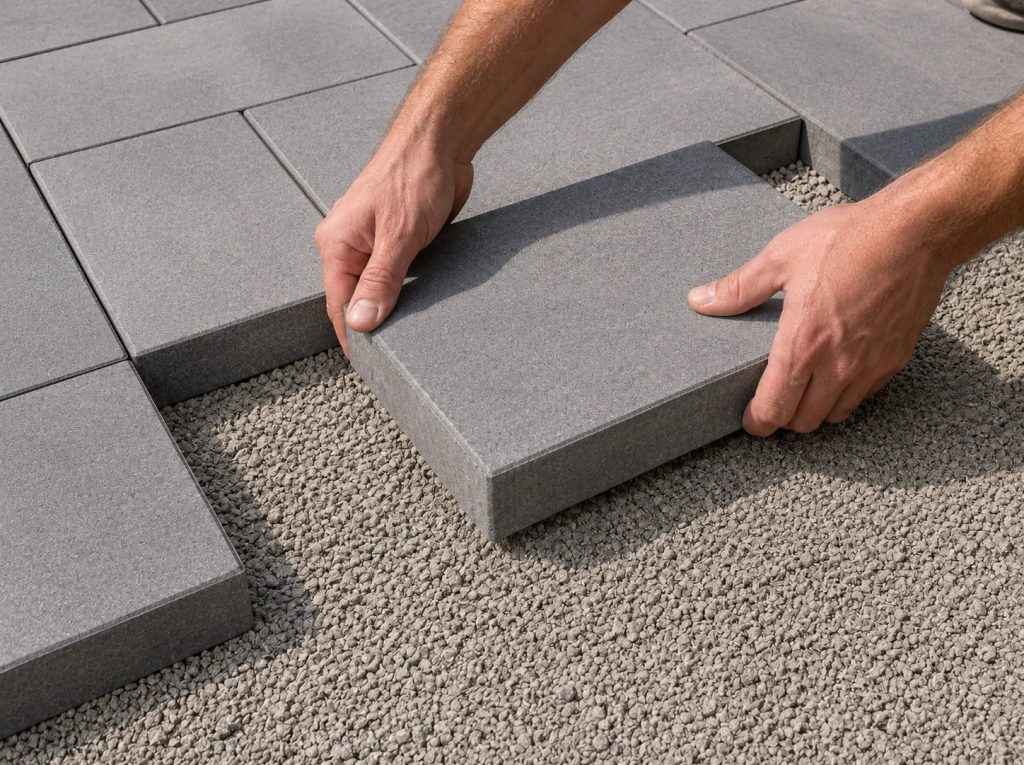
Pavers are laid to your approved design, cut cleanly at every transition, and graded so water moves where it should. The perimeter is locked with a concrete edge restraint, so the surface stays tight.
Finishing and Warranty
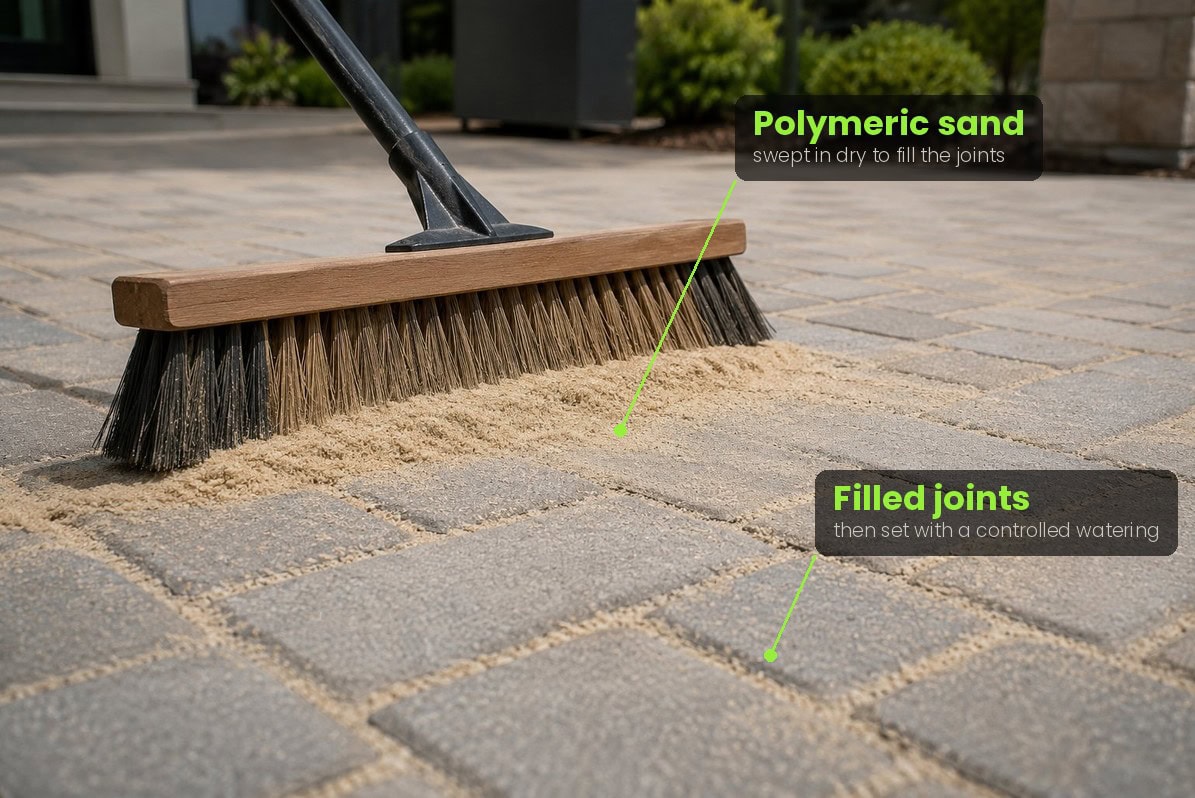
Joints are filled with polymeric sand and set following the manufacturer's process, the site is cleaned up, and we walk the finished project with you. Every project is backed by our 5-year workmanship warranty.
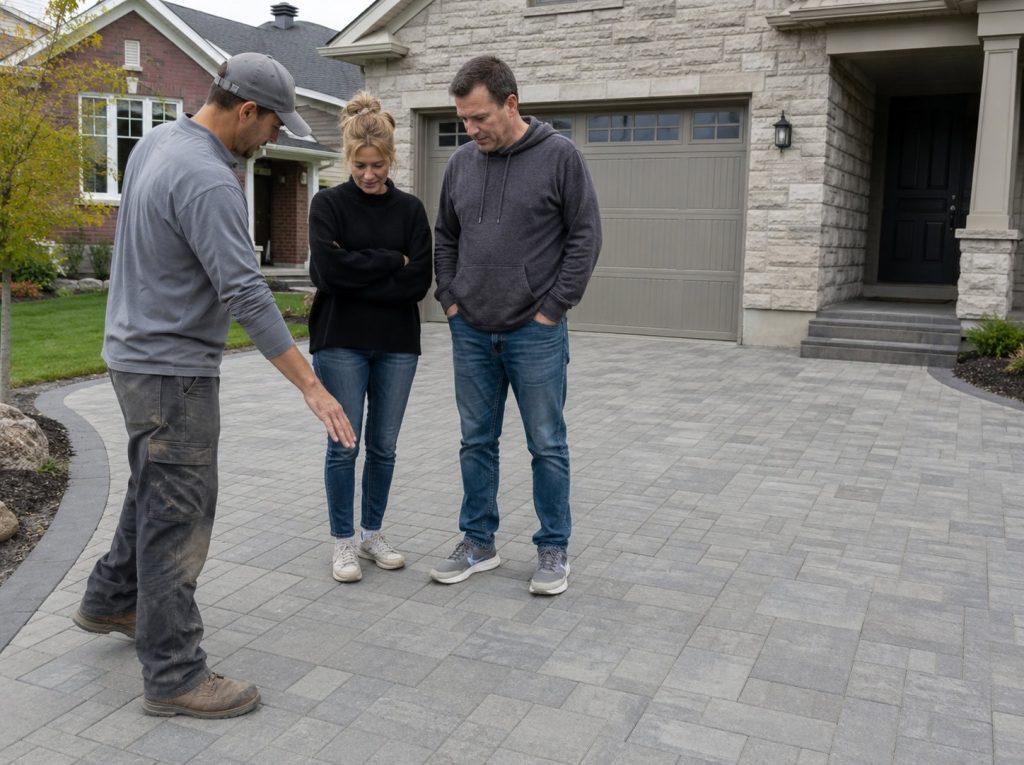
Common Interlocking Mistakes (and How We Avoid Them)
Interlocking can fail for a number of reasons. Some are well known, others are easy to overlook until the damage is already done. Below are the most common mistakes we see when repairing or replacing other contractors’ work, and how we avoid each one on a Stoneville project.
01 — Base Material
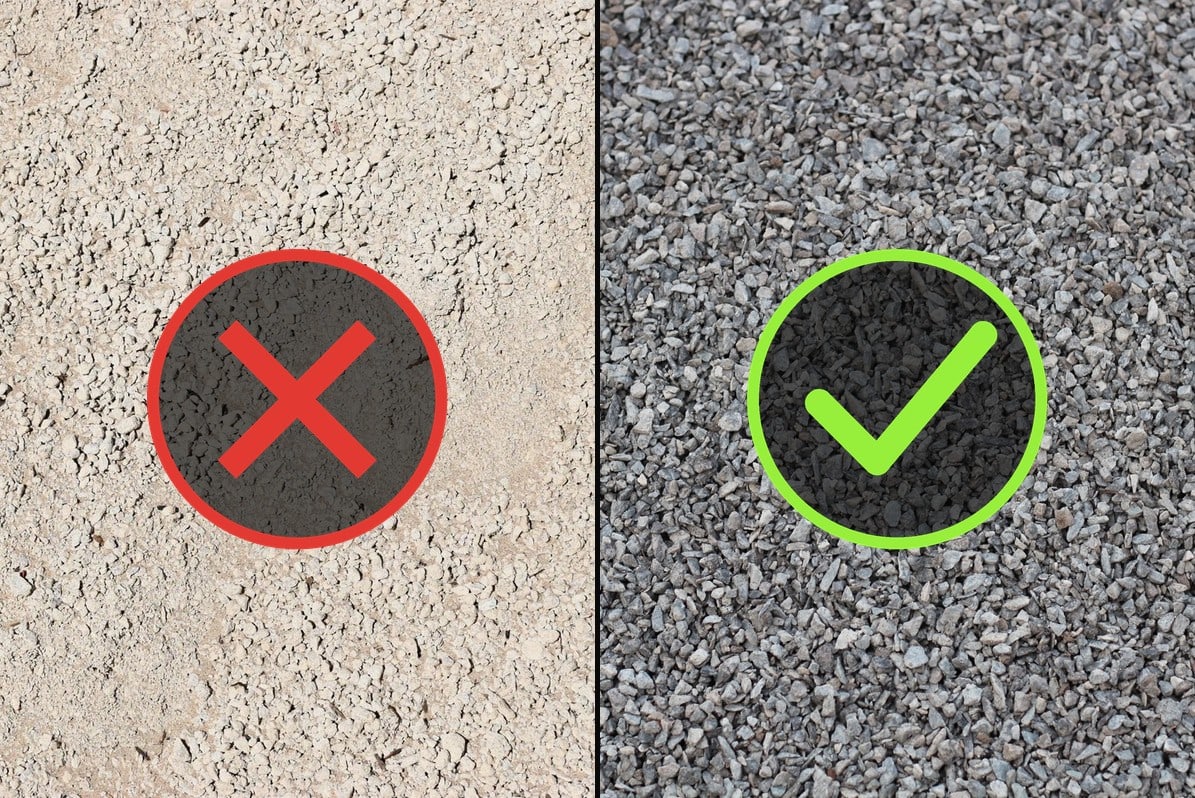
You’ve seen it across the GTA: a beautiful interlocking driveway that heaves and pops up after a single winter, aged like milk. We all know the freeze-thaw cycle is the culprit, but what actually leaves a driveway susceptible to it is the base beneath the pavers, and the most common problem there is limestone screenings. It’s cheap and easy to compact, but nearly impermeable, so water gets trapped right underneath the pavers and lifts them when it freezes. At Stoneville, we use open-graded aggregates, 3/4″ or 2″ clear stone with HPB bedding, that drain freely and hold up through every freeze-thaw cycle.
02 — Compaction and Base Depth
Depth and compaction both play a major role in the long-term durability of an interlocking project, and you can’t have one without the other. A deep base that wasn’t properly compacted settles unevenly, creating low spots where the surface starts to sink. Water then collects in those low spots, works into the base, and accelerates the settling, a cycle that feeds on itself and gets worse every season. The reverse is just as true: a shallow base that still sits in topsoil is guaranteed to fail, no matter how well it’s compacted. Proper base depth means excavating past the topsoil and down to undisturbed subsoil, into compacted clay or sand, before any aggregate goes in. At Stoneville, we excavate to subsoil and build every base in compacted lifts, so the full depth is consolidated before the first paver goes down.
03 — Edge Restraints
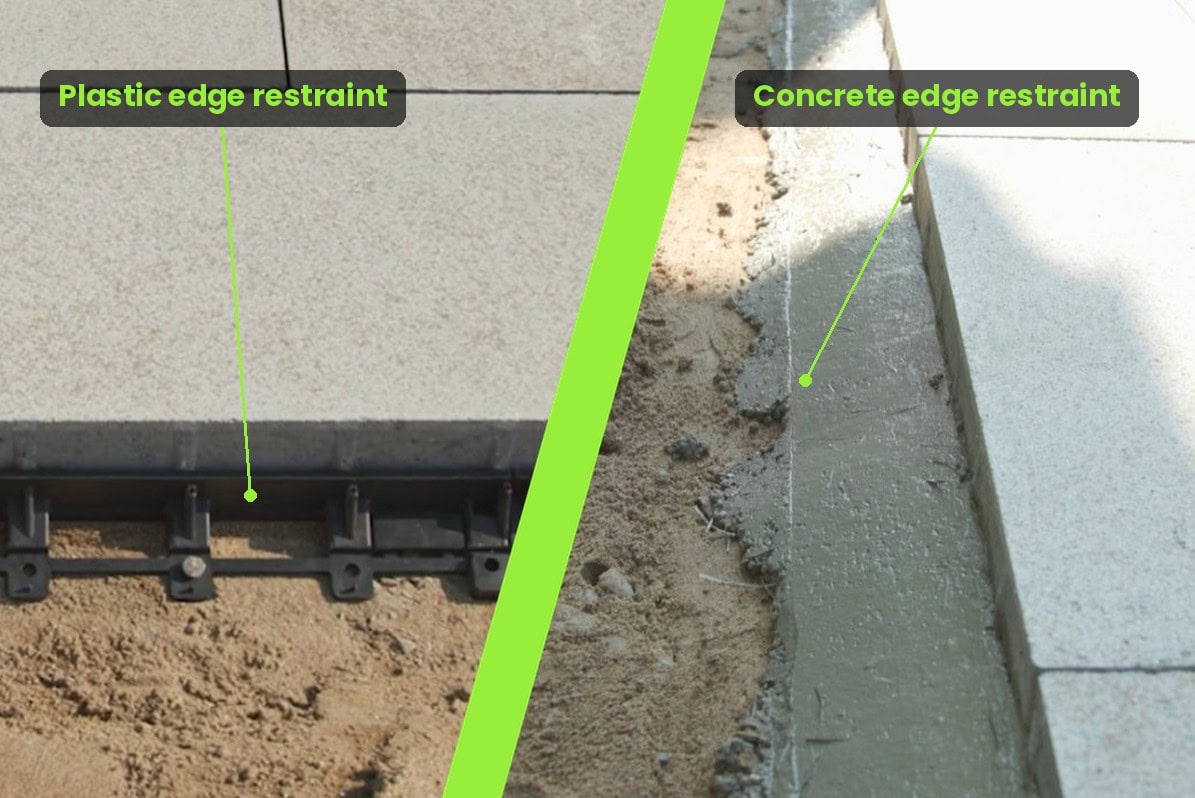
Interlocking pavers stay tight because the units around them lock each one in place. Without proper restraint around the perimeter, the outer pavers slowly migrate, the joints widen, and the failure spreads inward. It’s a common reason a job looks perfect for a few years, then starts coming apart. Because we build on open-graded bases, we don’t rely on plastic edge restraints spiked into loose stone. Instead, we secure the perimeter with a concrete edge restraint, a solid curb of cement troweled against the outer pavers that locks the border in place for the life of the surface.
04 — Drainage
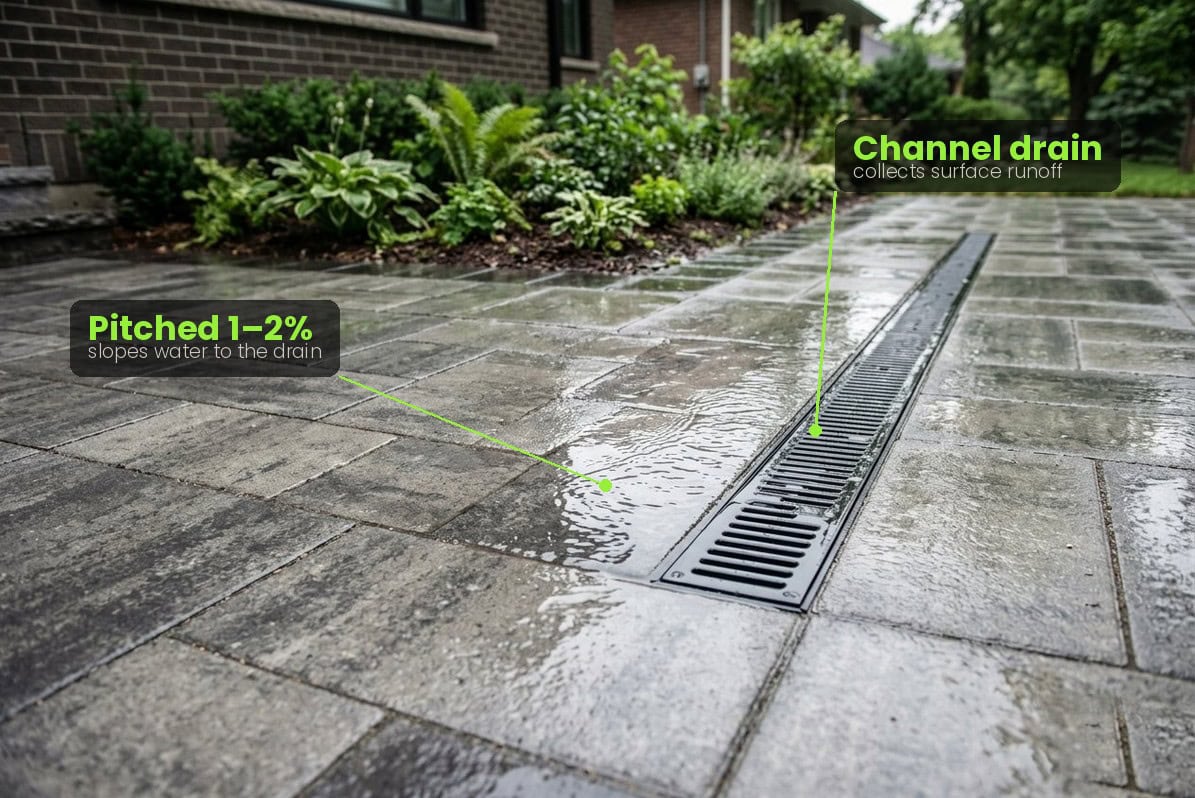
Water is the biggest threat to any hardscape, and managing it takes more than just slope. The surface has to be pitched, typically 1 to 2%, to move water away from your home, but it also needs somewhere to go. That’s where catch basins, drains, and French drains come in, collecting runoff and redirecting it away from the surface and the foundation. Get it wrong and water pools, seeps into the joints, and undermines the base from below. Every Stoneville project starts with a drainage assessment, so water is controlled and moved exactly where it should go before it has a chance to cause damage.
05 — Polymeric Sand and Joints
The joints between pavers lock the surface into one stable unit, and polymeric sand is what holds them. But it only works if it’s installed right: swept in dry, vibrated down so the joints fill completely, excess blown off, and then activated with a controlled watering per the manufacturer’s process. Rushed crews skip steps, flood the surface, or let rain hit the sand before it’s set, leaving joints loose and open to weeds, ants, and shifting. We follow the manufacturer’s process on every joint, so the surface stays solid and weed-free for years.